HERNIATED DISC?
SKIP THE SURGERY.
A herniated disc can turn a simple movement — standing up, sneezing, reaching for a coffee cup — into a jolt of pain down your leg. The good news: most herniated discs get better without surgery, and at Envision Chiropractic in Bellingham, that's exactly what we help patients do.
What Is A Herniated Disc?
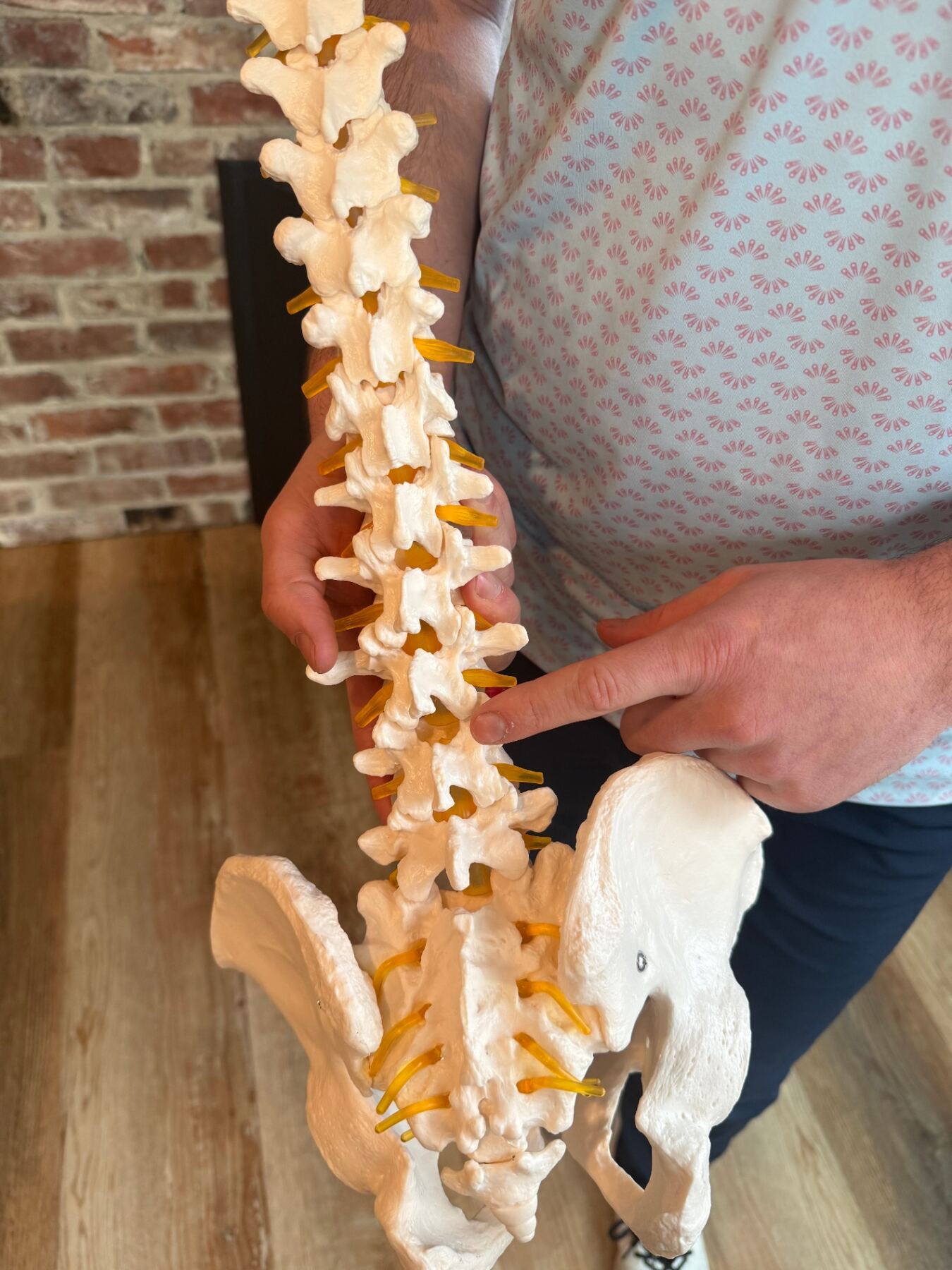
Between each of your vertebrae sits a disc — a tough outer ring with a soft, gel-like center that cushions your spine. A herniated disc (sometimes called a "slipped" or "ruptured" disc) happens when that soft center pushes through a crack in the outer ring. When the escaped material presses on a nearby nerve root, you feel it — often as pain, numbness, or tingling that travels into a limb.
Signs You May Have A Herniated Disc
- Sharp or burning pain that radiates into the buttock, leg, or foot (lumbar) or the arm (cervical)
- Numbness or tingling along the path of the affected nerve
- Muscle weakness in the affected limb
- Pain that worsens when sitting, bending forward, coughing, or sneezing
- Relief when lying down or changing position
Radiating leg pain specifically often means the disc is irritating the sciatic nerve — see our sciatica page for more.
Our Non-Surgical Approach
- Confirm it. A thorough exam — with imaging when indicated — confirms the herniation and which nerve is involved.
- Decompress. Spinal decompression gently creates negative pressure inside the disc, helping the herniated material retract off the nerve.
- Calm & heal. Laser therapy reduces inflammation around the nerve while the disc recovers.
- Stabilize. Adjustments and postural rehab restore healthy motion and keep the problem from returning.
"Decompression therapy here genuinely saved me from disc surgery. I came in skeptical and walked out a believer after about three weeks."
Individual results vary from patient to patient. Testimonials reflect one person’s experience and are not a promise or guarantee of any particular outcome.
Don't Wait It Out
Untreated nerve compression can lead to lasting weakness or numbness. The earlier we address a herniated disc, the better — and simpler — the outcome. We help disc patients from Bellingham, Lynden, and Ferndale. Start with a $47 first visit.
QUESTIONS, ANSWERED.
SAVE
YOUR
SPINE.
Most herniated discs heal without the operating room. Book your $47 first visit.