WALK FARTHER.
HURT LESS.
If your legs ache or go heavy after walking a block — and feel better the moment you sit or lean on a cart — you may be dealing with spinal stenosis. At Envision Chiropractic in Bellingham, we help patients manage it conservatively and keep moving.
What Is Spinal Stenosis?
Stenosis means "narrowing." Spinal stenosis is a narrowing of the spaces inside your spine, which crowds and compresses the spinal cord and nerves passing through. It usually develops slowly with age-related changes — thickened ligaments, bone spurs, or bulging discs — and most often affects the lower back (lumbar) or neck (cervical).
The Tell-Tale Sign
The classic symptom of lumbar stenosis is neurogenic claudication — leg pain, cramping, or heaviness that comes on with walking or standing and eases when you sit or bend forward (like leaning on a shopping cart). Other signs include:
- Numbness or tingling in the legs or feet
- Weakness or a feeling of unsteadiness
- Back or neck pain that builds over time
- Relief when bending forward or sitting
Our Non-Surgical Approach
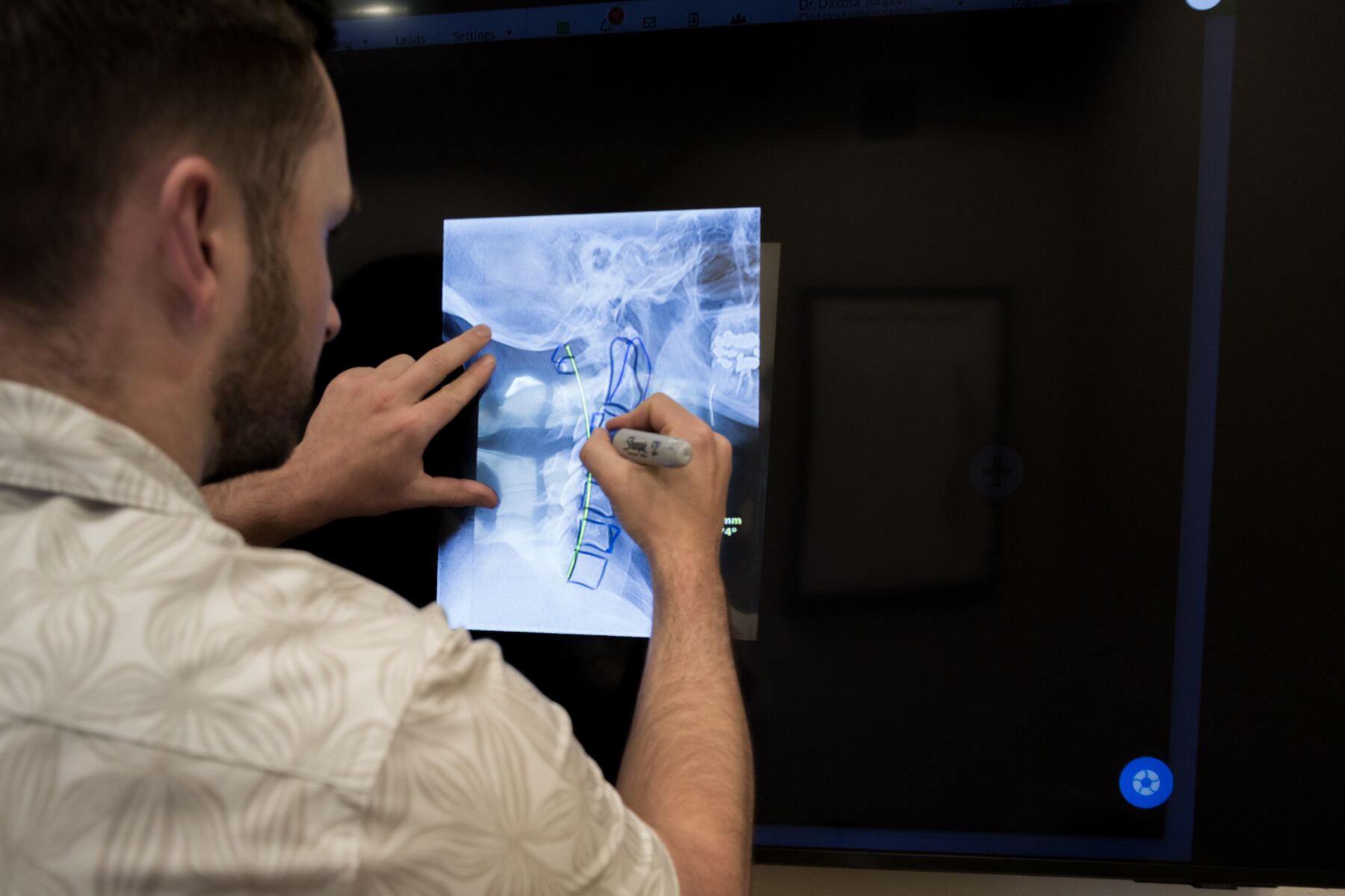
- Assess carefully. Stenosis calls for a precise, gentle plan — we examine thoroughly and use imaging to understand your specific narrowing.
- Open up space. Decompression and flexion-based techniques help reduce pressure on the nerves.
- Calm and strengthen. Laser therapy and targeted rehab reduce inflammation and build the support that keeps you walking.
Stay Active, Stay Independent
The worst thing stenosis does is make people stop moving — which makes everything worse. Our goal is simple: help you walk farther, hurt less, and stay independent. We care for stenosis patients from Bellingham, Lynden, and Ferndale. Start with a $47 first visit.
QUESTIONS, ANSWERED.
DON'T
STOP
WALKING.
Conservative care can keep stenosis from running your life. Book your $47 first visit.